Product Details
Click to Enlarge
      Alternative Image(s) :
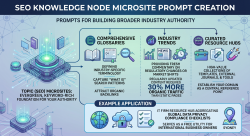
Knowledge SEO Microsite

 Note: No notes for this product
 Product Number: Industry Insights & Semantic Authority
 

 Country/Territory: South Africa


Share & spread the word:
Share


Description
Prompt
Add A Review
Reviews

GET FOUND (Ghost) Sites

Knowledge Node SEO Microsite Guidelines

Knowledge Node SEOs capture high-value informational queries by perfectly matching user search intent and proving deep Experience, Expertise, Authoritativeness, and Trustworthiness (E-E-A-T). They establish your brand as the definitive educational authority, bypassing sales pitches to dominate both traditional search and AI citations.

Core SEO KNOWLEDGE NODE Execution Guidelines

1. Mastering Educational Search Intent: A SEO Knowledge Node targets high-value long-tail queries (e.g., "How to...", "What is the cost of..."). Your content must instantly and objectively answer the searcher's core question to capture featured snippets.

2. Semantic Siloing (LSI Keywords): Keyword stuffing is penalized. You must weave Supporting LSI (Latent Semantic Indexing) keywords naturally into H2/H3 headers and atomic paragraphs to prove to algorithms that you cover the topic comprehensively.

3. Verified E-E-A-T & Citations: Because this is an educational asset, you must sell your expertise, not your product. This requires verified Person schema for Author Credentials and the embedding of an Authoritative PDF deep-dive to anchor your claims.

The 10 SEO Knowledge Node Content Categories

Ensure your drafted content strictly aligns with these semantic, educational frameworks:

1. Technical Process Breakdowns

Read More

Rule: Target "How to" queries by providing actionable, step-by-step guides formatted as numbered lists wrapped in `HowTo` schema.

Q: "What is the step-by-step guide to migrating from Universal Analytics to GA4?"

A: Migrating to GA4 involves creating a new property, installing the global site tag (gtag.js), and manually mapping your Universal Analytics custom events to GA4’s event-based tracking model.

2. Concept Definitions

Read More

Rule: Target "What is" queries with dictionary-style definitions where the very first sentence is a liftable, objective summary.

Q: "What is Semantic Search in the context of Answer Engine Optimization?"

A: Semantic search refers to a search engine's ability to understand the intent and contextual meaning behind a query, rather than just matching literal keywords. It relies heavily on natural language processing and entity relationships.

3. Cost & Data Analysis

Read More

Rule: Target "How much does X cost" queries by publishing objective research that relies on verifiable, first-party data points and metrics.

Q: "What are the average 2026 data privacy compliance costs for mid-sized healthcare providers?"

A: Industry data for 2026 indicates that mid-sized healthcare providers spend an average of $150,000 annually on HIPAA and data privacy compliance. This includes software auditing, staff training, and third-party risk assessments.

4. Myth vs Fact Clarifications

Read More

Rule: Tackle industry misinformation head-on with conversational, clear-cut comparative answers.

Q: "Is exact-match keyword density still a primary ranking factor?"

A: Myth: You must use a keyword 10 times to rank. Fact: Exact-match keyword density is obsolete. Search algorithms now prioritize topical authority, comprehensive LSI keyword integration, and satisfying user intent above arbitrary repetition.

5. Industry Benchmarks

Read More

Rule: Compile verifiable industry statistics backed by clearly stated, authoritative methodologies to attract backlinks.

Q: "What is the average customer acquisition cost (CAC) for B2B SaaS companies?"

A: In 2026, the average Customer Acquisition Cost (CAC) for enterprise B2B SaaS companies is approximately $700. This figure varies significantly based on the length of the sales cycle and the complexity of the software integration.

6. Comparative Analysis

Read More

Rule: Target "X vs Y" search queries using structured HTML side-by-side contrasts so LLMs can interpret data instantly.

Q: "What are the major differences between Type 1 and Type 2 Hypervisors?"

A: A Type 1 hypervisor (bare-metal) runs directly on the host's hardware for high performance, whereas a Type 2 hypervisor runs as an application atop an existing operating system, resulting in slightly higher latency.

7. Regulatory Breakdowns

Read More

Rule: Target complex regulatory or legal questions using atomic paragraphs and `FAQPage` schema.

Q: "What are the cross-border merger compliance rules?"

A: Cross-border mergers must comply with both local antitrust laws and the target country’s foreign direct investment (FDI) regulations. Failure to file pre-merger notifications can result in heavy financial penalties.

8. Strategic Checklists

Read More

Rule: Provide scannable, snippet-friendly lists that answer intent-driven "What do I need before..." queries.

Q: "What is the ultimate pre-launch checklist for SaaS products?"

A: Before a SaaS launch, your checklist must include finalising load testing for 10k concurrent users, verifying Stripe payment gateway webhooks, and publishing a comprehensive API documentation portal.

9. Quick Fact Sheets

Read More

Rule: Publish bite-sized, authoritative snippets optimized for voice search and quick AI chat extraction.

Q: "What is the water footprint of fast fashion production?"

A: Quick Fact: The fast fashion industry’s water footprint is immense. It takes approximately 2,700 litres of water to produce a single cotton t-shirt—the equivalent of one person’s drinking water for 2.5 years.

10. Expert Insight Summaries

Read More

Rule: Target "Future of X" queries by providing short answers attributed to named professionals, driving E-E-A-T through verbatim quotes.

Q: "What is the future of solid-state batteries in EVs?"

A: Lead Engineer John Roe notes: "Solid-state batteries will revolutionise the EV market by 2030, offering twice the energy density of liquid lithium-ion cells while entirely eliminating the risk of thermal runaway."

Mandatory Media & E-E-A-T Context

To satisfy rigorous algorithmic E-E-A-T requirements and maximize time-on-page (a crucial SEO metric), an SEO Knowledge Node must function as a multi-media educational hub.

  • Authoritative SEO PDF: You must provide a downloadable asset (whitepaper, industry report, or technical guide) to prove deep documented knowledge and attract backlinks.
  • AI Citation Link: You must embed the Webo tracking link in the background schema to capture and attribute AI referral traffic correctly.
  • Semantically Relevant Media: Use high-quality infographics or charts. Ensure the alt text on your images accurately reflects the Primary Keyword and User Intent.
Webo Architecture Rule: When you are ready to build, use the Knowledge Node SEO Microsite Prompt Generator. The AI will take your drafted content and weave your LSI keywords naturally throughout the exact JSON-LD Schema required to dominate search results.
 
Email this pageBookmark this page Print this Page Login
Loco Markets for Biz Finders aka Pocket AdvisorsMeetings Communicator and on-phone  Meeting PackWhatsGood CommunicatorsLink and List CommunicatorWebo B2B Directory HubsWebo eMarketingWebo eBusiness and eCommerce SitesWebo GBP How To BlogWebo Directory